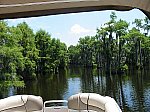
They had a meeting this last Tuesday about what the state was going to do about our lake. This is a long read but very intresting. If your not intrested in the article I will kida hit the high points.
1. drain the lake, which will require a lot of dirt movement to get large bodies of water to drain through the channels
2. After draining let it sit for years to make sure the lake bottom is dry so large equipment can get in to cut the trees. They only want 17 trees per acre. There are places and large places with 1000 of trees per acre now.
3. Rework or replace the dam and spillway.
4. Time is stated at 5 years with the drawdown some are saying it will take 10 years. Again time and money are the main problems.
I think that they need to do what needs to be done but when you get the government involved it will be done on their schedule and we are going to be without a lake for a long time. This will reduce our home prices, put businesses out of business, and turn our lake into a field of shrubs and wild plant growth that would make it impossible to navigate through. As it's only been down for three months and I have vegitation in the lake bottom now 4 to 6 foot high and its not grass but bushes and trees (not cypress) growing right now. I know when they reflood the lake it will kill all this but then you have the same problem with underwater stumps and stuff.
1
LOUISIANA DEPARTMENT OF WILDLIFE & FISHERIES
OFFICE OF FISHERIES
INLAND FISHERIES SECTION
Analysis of Proposed Habitat Modifications for Management of Invasive Aquatic Plants in Lake Bistineau
August 2013
2
Analysis of Proposed Habitat Modifications for Management of Invasive Aquatic Plants in Lake Bistineau
By
Inland Fisheries Staff
Introduction
In a recent meeting with Secretary Robert Barham and Inland Fisheries Director Mike Wood, Representative Gene Reynolds asked the following question: “Assuming funding was available, is there anything else that can be done to improve the Lake Bistineau giant salvinia problem?” The question is certainly reasonable, considering that the invasive aquatic weed continues to be a serious problem, despite extensive control efforts. Some Lake Bistineau users have expressed frustration with the persistent problem and disapproval with current salvinia control methods.
Two proposed control concepts were addressed by Louisiana Department of Wildlife and Fisheries (LDWF) staff biologists: replacement and/or modification of the water control structure, and timber removal. Related considerations and conclusions are outlined below.
Background
Lake Bistineau is one of several waterbodies in the Red River corridor formed by the “Great Red River Raft”. The raft was a series of blockages comprised of woody debris, sand and mud that effectively blocked flow of the Red River from Natchitoches to the Arkansas boundary. Over a period of several centuries, backwater areas were enlarged and scoured by the diverted water flow. When the raft was finally removed in 1873, the Red River channel reclaimed the flow, leaving a series of channel scars. Over time, those scars became typical Louisiana swamp habitat, complete with cypress forests.
Water fluctuation in Lake Bistineau was stabilized in 1938 with construction of a dam. From that point forward, the natural water fluctuation cycle was altered and the related benefits were compromised. Organic material from annual leaf fall no longer decomposed as it would with periods of exposure to air. A layer of organic material began to accumulate. Water quality became degraded and the spawning of nesting sport fish was inhibited. Thick standing timber became an effective barrier to wind flow and wave action. As a result, floating vegetation became particularly problematic. Duckweed and water hyacinth were most prominent for many years. In 2006, the threat was magnified with the introduction of giant salvinia. The tremendous reproductive capacity of this invasive species makes it one of the worst invasive species in the world. Managing such a plant in ideal habitat is a formidable challenge. An integrated management plan, including water fluctuation, biological controls, and herbicide use has been adopted by LDWF.
3
The existing Lake Bistineau control structure maintains a pool of 17,200 acres at 141 feet NGVD. Twelve steel sluice gates are included in the headgate structure. The 6’ x 6’ gates are operated with mechanical lifts. These gates allow for water level reduction of 7’ below pool stage or to 134’ NGVD. The remaining lake surface area at 134’ NGVD is estimated at 7,500-10,000 acres.
Current Control Actions
With the exception of cold weather, lake drawdowns are currently the most efficient vegetation control option available for Lake Bistineau. Drawdowns are cost effective, but they are not without cost. A substantial loss occurs with each drawdown in the form of impaired access, reduced recreational opportunity, and reduced aesthetic value. As a result, drawdowns are unpopular with a significant percentage of Lake Bistineau users.
The tremendous reproductive capacity of giant salvinia can, and often does counteract the combined benefits of applied control measures. Other control options, including modification to the existing control structure and timber harvest have been proposed for consideration. Feasibility and potential benefits of those proposed actions are discussed below.
Past Proposed Water Control Structure Modifications
In 2010, LDWF released a Lake Bistineau Rehabilitation Plan that referenced modification of the spillway structure to increase overflow, or skimming capability. The concept was intended as a control measure for floating aquatic vegetation. Under favorable conditions, vegetation would flow over the water control structure and out of Lake Bistineau. The concept was eventually abandoned with the conclusion that skimming was not actually control, but was essentially a downstream transfer of the problem to the Red River Waterway.
The 2010 Plan also included recommendations for a new water control structure at the Loggy Bayou channel to allow for greater water fluctuation capability. From the most basic biological perspective, the action is encouraged. Complete drawdown capability could provide dewatering to levels comparable to the pre-impoundment period. Processes that controlled organic accretion and aquatic vegetation could be re-established. Annual reductions of salvinia through water fluctuation and herbicide applications could reduce the coverage potential of salvinia for the successive year.
Expectations of Control
Unfortunately, eradication of salvinia in Lake Bistineau is not an outcome that can be reasonably expected to occur. Complete removal of the invasive plant is unlikely, even with water removal to the existing channel. Residual plants will survive in refuges that could include,
4
inundated ponds, stump holes, and even wet organic material. Subsequent re-introduction through unintentional transport by man or by wildlife is certain as well.
Proposed Solutions and Logistics
Complete drawdown capability would allow increased opportunity for timber removal. The thick standing timber in Lake Bistineau blocks the wind and wave action necessary to aid in the control of floating vegetation. Louisiana waterbodies with sufficient wind and wave action seldom have significant problems with floating aquatic vegetation. Wind driven waves eject floating vegetation to the shoreline. Caddo Lake provides a good example. The majority of the Louisiana side of Caddo Lake is open water habitat that remains relatively clear of giant salvinia. The Texas side, with its dense cypress forest, suffers a chronic giant salvinia problem. Similar examples are available throughout the 40 Louisiana waterbodies that now have giant salvinia. Lake Bistineau and the other heavily timbered impounded swamps in the Red River corridor all are particularly susceptible to giant salvinia because they are heavily timbered and have restricted wind and wave action.
Timber removal for vegetation control requires consideration of a complex series of questions, including the following:
1. How much timber must be removed to provide for adequate wind and wave action?
2. Can a sufficient volume of trees physically be removed?
3. Is there a sufficient financial incentive for harvest of the trees?
4. Would public opinion be favorable, or at least tolerant of the removal of a sufficient volume of trees to provide for adequate wind and wave action?
The question of how many trees to be removed has not been answered to date. LDWF foresters will be cruising timber in the lake bottom to calculate current stem density. Sufficient space must be provided between the vegetated crowns of the trees to provide the necessary wind and wave action. The distance of at least 40-50 feet is estimated. Habitat modeling will be necessary before project implementation. Sufficient tree separation must be provided throughout the impoundment for beneficial effects to be realized. Areas that do not have sufficient tree separation will serve as wind breaks and undermine beneficial effects.
Economics and Feasibility
Cypress trees are well suited to the natural water fluctuation typically associated with swamp habitat. However, prolonged flooding is a stressor to cypress. Stress symptoms include reduced growth and the characteristic “needle-point” tree tops that many Lake Bistineau cypress trees display. Very few trees in Lake Bistineau are large enough to be marketable for logs. The commercial market for Lake Bistineau trees is currently limited to pulp and mulch.
5
Timber harvest in Lake Bistineau includes challenges that determine economic feasibility. Currently, harvest with water borne equipment is considered to be impractical. One complicating aspect is that trees would need to be cut underwater to prevent the remaining stump from being a boating hazard. Harvest with heavy land based equipment also includes significant challenges. Access would be directly related to lake bottom firmness. Lake bottom firmness is directly related to dryness.
Tree coverage in Lake Bistineau is not complete throughout the impoundment. Cypress trees cannot germinate in standing water. Open water areas that currently exist in Lake Bistineau are the pre-impoundment areas that held water year round. Complete drawdown capability would be necessary to allow access to standing timber throughout Lake Bistineau. Areas of timber without sufficient tree separation would compromise resulting benefits. Sufficient wind and wave action must be provided throughout the impoundment for successful control of floating aquatic vegetation. A significant portion of Lake Bistineau is privately owned. Arrangements to allow for timber harvest throughout the impoundment should be made before timber harvest is initiated.
Other Factors
Even with increased drawdown capacity, other complicating factors remain. Access to the lake bottom with timber harvesting equipment would be difficult due to instability of the highly organic substrate. A substantial reduction of organic material will be necessary. Repetitive dry periods would be required to allow for the process to occur through aerobic decomposition. Periods that could allow drying of the Lake Bistineau substrate are limited to late summer and early fall. Extended dry periods are not possible because of the extensive watershed. Drawdowns in 2004 and 2005 were fortuitously timed with a drought. The two dewaterings provided significant reductions of organic substrate to 134’ NGVD. Lake bottom below 134’ NGVD has an even greater layer of organic material because it has not been exposed to air since impoundment. The lower elevation is more subject to re-flooding. Consequently, more dry periods will be required for removal of organic substrate. Depending on weather conditions, 3-5 consecutive midsummer drawdowns will be required to stabilize lake bottom below 134’ NGVD to allow for access with timber harvesting equipment.
Fisheries Impacts
Drawdowns to the current maximum capacity of the control structure reduce Lake Bistineau from 17,000 acres to an estimated 8,000 acres. Drawdowns to 7 feet below pool stage have been conducted with increased frequency since 2004. Fish kills have not typically been associated with Lake Bistineau drawdowns and the current fish population is considered to be
6
in good health. Drawdowns more extensive than currently possible will carry a direct relationship to potential for fish kills. Drawdowns of Lake Bistineau to the pre-impoundment channel will be unavoidably associated with fish kills. Multiple drawdowns will be necessary before property below 134’ NGVD will be accessible to land based timber harvest equipment. A complete loss of the existing fish population is a probability. Recovery to a comparable fish population should not be expected until at least 4 years after the final dewatering.
Summary
1. Lake Bistineau is one of a series of waterbodies created by diversion of water flow from the Great Red River Raft.
2. When the raft was removed, the Red River channel reclaimed water flow, leaving scoured, low lying areas to become swamp habitat.
3. The timing between complete removal of the raft in 1873 and impoundment of Lake Bistineau (1938) was sufficient for growth of a thick cypress forest.
4. Impoundment of the cypress swamp impaired natural process that provided efficient decomposition of organic material. The newly created habitat was well suited for overabundant aquatic vegetation.
5. Due to inadequate wind and wave action, floating aquatic vegetation has been a chronic problem. Water hyacinth replaced the native duckweed as a significant problem. Giant salvinia has recently become the most significant problem.
6. Currently available control methods are unpopular to some users and have not yielded satisfactory results
7. Other options, including modification to the existing control structure and timber thinning have been proposed to create conditions less favorable for overabundant aquatic vegetation.
8. At least 40 Louisiana waterbodies currently have become infested with giant salvinia, but the invasive species is only a significant problem in waters with limited air flow and wave action.
9. Significant timber thinning would be required throughout the lake bottom to convert the existing cypress forest to habitat less favorable to floating vegetation.
10. Modification of the existing water control structure and dewatering of Lake Bistineau to the pre-impoundment channel will be necessary for sufficient timber thinning.
11. A series of 3-5 consecutive drawdowns to the pre-impoundment channel will be required to stabilize lake bottom below 134’ NGVD.
12. Stem density with at least 40-50 feet of separation throughout Lake Bistineau is a requirement for success. Any remaining areas with greater stem density will compromise wind flow and wave action for the remainder of Lake Bistineau.
13. Preliminary requirements include:
7
a. Public outreach to explain all aspects of the endeavor, including the expected multi-year time frame
b. Solicitation of public opinion and resolution of opposition to necessary action
i. Opposition to cypress harvest is anticipated
ii. Opposition to potential loss of sport fish population is anticipated
iii. Opposition to associated local economic loss is anticipated
c. Determination of lake bottom ownership
d. Approval for timber removal by all applicable property owners
e. Procurement of funding necessary for control structure modification
f. Confirmation that a commercial market exists for Lake Bistineau cypress trees
g. Commitment for harvest during designated drawdown periods
Conclusion
Lake Bistineau is the product of unique circumstances that combined to create a heavily forested impoundment. In contrast to Louisiana waterbodies with more open habitat, Lake Bistineau has insufficient wind flow and wave action to control the floating aquatic vegetation. Giant salvinia has become an established component of the Lake Bistineau ecosystem and will remain so into the foreseeable future. Through modification of the existing control structure and timber harvest, the Lake Bistineau habitat can be modified to be less favorable to giant salvinia. Successful completion of habitat modification would allow increased natural control of floating vegetation and would provide significant relief from giant salvinia. An extended time period would be required for successful completion of the project. The effort would include an associated loss of recreational fishing opportunities for at least 10 years.
Habitat modification through the addition of an auxiliary control structure capable of completely dewatering the lake and timber harvest should only be implemented after successful resolution of concerns related to economic feasibility and public opinion. Initiation of control structure modification and/or timber harvest without resolution of those concerns is strongly discouraged.
Looks like boating is over for me.
Moderators: Redneck_Randy, badmoonrising, lakerunner
Looks like boating is over for me.
2001 22' Tracker Regency (sold)
2001 Mercury 90 HP (sold)
Elm Grove, La
Lake Bistineau
2001 Mercury 90 HP (sold)
Elm Grove, La
Lake Bistineau
Re: Looks like boating is over for me.
That is horrible. Are there any other lakes near you?
-
HandymanHerb

- Site Admin
- Posts: 14336
- Joined: Fri Mar 17, 2006 8:57 pm
- Location: Orlando Fla
Re: Looks like boating is over for me.
Sorry to hear that, you already had to deal with low water, now no water 
In Memory of John 6x6 Larsen

Re: Looks like boating is over for me.
That's a much larger lake than I though. 17,000 acres is a big lake, but it sounds as if it's also a very shallow place. And it's doubtful that any ecologist will allow a fleet of Timberjack grapple skidders into that river bottom to harvest the trees.
It's a damned if you do and damned if you don't problem. Sometimes there is just not a solution to a problem that's affordable.
And it's doubtful any state has the monies to address the problems in your lake.
It's a damned if you do and damned if you don't problem. Sometimes there is just not a solution to a problem that's affordable.
And it's doubtful any state has the monies to address the problems in your lake.
'12 Bennington 24' SSLX Yamaha 150
Re: Looks like boating is over for me.
Bamaman wrote:That's a much larger lake than I though. 17,000 acres is a big lake, but it sounds as if it's also a very shallow place. And it's doubtful that any ecologist will allow a fleet of Timberjack grapple skidders into that river bottom to harvest the trees.
It's a damned if you do and damned if you don't problem. Sometimes there is just not a solution to a problem that's affordable.
And it's doubtful any state has the monies to address the problems in your lake.
It is a pretty big lake and it is shallow. Most places we boat are between 7 and 20 feet, big difference. That is part of the problem is where it deep there are lots of trees that need to be removed. But they can start in the shallow areas and move to the deeper areas when it dries up.
Damned if you do or don't. I think that they should start now while the lake is down but a lot of boat owners just hung their boat in the boat house and now cant get them out. So their closing the gates next month to raise the lake again to allow for removal of all boats.
They have not decided what to actually do yet. But sense the lake is so messed up they need to go ahead and do it. Your right on the money they don't have enough to do it. If they let home owners and marina owners cut some of the trees it would help them some but not enough. I guess they could ask Obama for some money and send him the trees that they cut for White House Christmas trees. That would last for the next 300 years. I don't know if you know if Cypress is not cut up when still wet cutting it is almost impossible. It will ruin a chain on a saw within a few cuts.
It's against the law to cut or damage a cypress tree in Louisiana. We had a car dealer that had been in business here for years buy a place on the lake and decided he needed some trees cut in the lake while it was down. He cut a bunch and was fined $10,000 a tree. They have sold the property and the business to pay the fine. This was years ago before we got the sylvania in the lake.
2001 22' Tracker Regency (sold)
2001 Mercury 90 HP (sold)
Elm Grove, La
Lake Bistineau
2001 Mercury 90 HP (sold)
Elm Grove, La
Lake Bistineau
Re: Looks like boating is over for me.
Jimrs,
That is so sad. My wife and I grew up in Arcadia and I spent many hours on Bistineau. My mom and dad had a trailer at Tom's camp for many years. One of the best strings of Chinquapins (red ears or shellcrackers) I ever caught was on Lake Bistineau. I had none under a pound and the string was anchored by a two pounder.
I know tHat drawdowns are a common method of vegetation control but a multi year drawdown wound be disastrous to a fragile local economy.
How far is the Red River, Kepler Lake, or Black Lake from you. That would be the only options that I recall.
That is so sad. My wife and I grew up in Arcadia and I spent many hours on Bistineau. My mom and dad had a trailer at Tom's camp for many years. One of the best strings of Chinquapins (red ears or shellcrackers) I ever caught was on Lake Bistineau. I had none under a pound and the string was anchored by a two pounder.
I know tHat drawdowns are a common method of vegetation control but a multi year drawdown wound be disastrous to a fragile local economy.
How far is the Red River, Kepler Lake, or Black Lake from you. That would be the only options that I recall.
Jeff
----------------------------------
Peggy Sue
25 x 10' 2009 Premier Escapade
225 Mercury Verado
----------------------------------
Peggy Sue
25 x 10' 2009 Premier Escapade
225 Mercury Verado

Re: Looks like boating is over for me.
That sucks.....sorry to hear that.
SMLTOONER
Ted & Emily
2019 Bennington 21SL Tri-toon
2019 Yamaha 150 HP
Smith Mtn. Lake, Virginia
Ted & Emily
2019 Bennington 21SL Tri-toon
2019 Yamaha 150 HP
Smith Mtn. Lake, Virginia
Re: Looks like boating is over for me.
Jimers.... thought about you when I saw this on the news this past week... 5 years... horrible news for you and others that use Bistineau... My in laws used to have a camp house on bistineau and I spent many hours using my father in law's little bass boat just running around the lake and enjoying the view......need to put your boat on a trailer and come on over here to Caddo Lake..... or hell, just drive over without the boat.. we'll go fishing....
Roland & Jo
2010 Bennington 20 Sfi
Yamaha 75 4 Stroke
Shreveport, Louisiana
2010 Bennington 20 Sfi
Yamaha 75 4 Stroke
Shreveport, Louisiana
Re: Looks like boating is over for me.
Thanks Roland, I guess my boating days are over with or without the lake. My boat has been in storage now for the last 5 years most of the time. I think that last year we had it in the water for a total of a week. The year before about a month. I guess the money I spent to put in a boat house and all the lake bottom work was money spent in error. At my age I no longer have a dog in this hunt. I do however hope that they clear it up for the rest of the citizens of the parish. Bistineau was the most beautiful lake I have ever seen now it's ruined.
2001 22' Tracker Regency (sold)
2001 Mercury 90 HP (sold)
Elm Grove, La
Lake Bistineau
2001 Mercury 90 HP (sold)
Elm Grove, La
Lake Bistineau