prop problem 1997 force75
Moderators: Redneck_Randy, badmoonrising, lakerunner
prop problem 1997 force75
I think I am having a prop problem on my 98 tracker 20'. it has a 1997 75hp force on it with a 13p prop. I was in some pretty rough water over the weekend trying to play with the kids on the tube. Well i had a tub-o-lard kid on the tube along with my step son and 2 times (once when i was taking off and once while making a hard turn under full throttle) it acted like i shifted into neutral. the engine reved high and it stopped pulling. I shifted into neutral and back into forward and it was ok. Im pretty sure the prop hub is toast. It has a 13p on it now. can I change the pitch to pick up a little more top speed? Anyone have a force 75 with something besides a 13p?
Last edited by sick_46 on Mon Sep 22, 2014 1:46 pm, edited 1 time in total.
Re: pro problem 1997 force75
If you actually spun the prop you would have effectively been done. What you're experiencing is called Ventilation
Ventilation occurs when air from the surface or the exhaust system is sucked into the propeller. This often occurs during tight turns when the propeller is near the surface. It can also happen when the outboard is mounted to high on the transom. This can but the ant ventilation plate above the bottom of the haul making the plate ineffective at protecting the prop form air that is traveling down the haul.
Regardless of how the air is introduced its effect is the same. The air bubbles momentarily unload the propeller causing it to over rev. This also brings about a massive cavitation that further unloads the prop decreasing the amount of thrust the engine can provide. Once the ventilation induced cavitation subsides the propeller can again bight the water and resume normal operation.
When a given boat/outboard combo has a venting problem there are a number of ways to solve the problem. The most obvious is to mount the outboard lower in the water. When a propeller operates at increasing depths the environment it is rotating in is more stable and the prop is less likely to vent or cavitate. The anti-ventilation plate also becomes more effective at blocking air from the surface. This option can be undesirable because the outboard will cause more drag. Lowering the outboard will also increase the risk of hitting things like Rocks. The other option for solving the problem is to use a different prop design.
Ventilation occurs when air from the surface or the exhaust system is sucked into the propeller. This often occurs during tight turns when the propeller is near the surface. It can also happen when the outboard is mounted to high on the transom. This can but the ant ventilation plate above the bottom of the haul making the plate ineffective at protecting the prop form air that is traveling down the haul.
Regardless of how the air is introduced its effect is the same. The air bubbles momentarily unload the propeller causing it to over rev. This also brings about a massive cavitation that further unloads the prop decreasing the amount of thrust the engine can provide. Once the ventilation induced cavitation subsides the propeller can again bight the water and resume normal operation.
When a given boat/outboard combo has a venting problem there are a number of ways to solve the problem. The most obvious is to mount the outboard lower in the water. When a propeller operates at increasing depths the environment it is rotating in is more stable and the prop is less likely to vent or cavitate. The anti-ventilation plate also becomes more effective at blocking air from the surface. This option can be undesirable because the outboard will cause more drag. Lowering the outboard will also increase the risk of hitting things like Rocks. The other option for solving the problem is to use a different prop design.
Respect Our Recreational Resources
Leaving Only "The Footprints of Your Passing"
Boating the Muskingum River
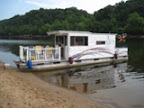
1972 35' Crest Pontoon Houseboat
2007 90 hp. Yamaha
Leaving Only "The Footprints of Your Passing"
Boating the Muskingum River
1972 35' Crest Pontoon Houseboat
2007 90 hp. Yamaha
Re: pro problem 1997 force75
I have read several threads where people have had props spin and still be able to use the boat like i did. they verified it by marking the pro and hub and taking the boat back out and seeing if the marks move. Not saying that that is my problem because I have never owned a boat and this was only my 4th time out with it.
If I do have a vent problem what kind of prop should I purchase to avoid it?
If I do have a vent problem what kind of prop should I purchase to avoid it?
-
lakerunner

- Site Moderator
- Posts: 4820
- Joined: Fri Mar 17, 2006 2:31 pm
- Location: Live in McAlester, Ok Boat on Tenkiller
- Contact:
Re: pro problem 1997 force75
New prop won't necessarily cure the cavitation. What kind of RPM are you getting with this prop? Is the cavitation plate flush with bottom of the motor well? It should be flush or below it.
Loyd & Betty Meeks
Livin the lake life
2004 Tracker 22 Regency/2010 90 E-Tec. Pulled by Ford 2020 F 250,
McAlester, Oklahoma
Home lake is Tenkiller
Livin the lake life
2004 Tracker 22 Regency/2010 90 E-Tec. Pulled by Ford 2020 F 250,
McAlester, Oklahoma
Home lake is Tenkiller
Re: pro problem 1997 force75
Please excuse my ignorance. what is the cavitation plate?
Re: pro problem 1997 force75
Ill have to check the rpms. I have not really paid close attention to it
Re: prop problem 1997 force75
The flat surface on the lower unit of the motor just above the prop.Please excuse my ignorance. what is the cavitation plate?
Check rpms with a light load they should be close to max rpm of engine.
Also less pitch if the motor is not overloaded will not produce more speed.
only reduce pitch if motor is overloaded.
1995 beachcomber conversion to tritoon with Honda 135 ,
Link to rebuild [url=http://www.pontoonforums.com/viewtopic.php?f=16&t=19016][Knot Normal][/url]
God Bless America
Link to rebuild [url=http://www.pontoonforums.com/viewtopic.php?f=16&t=19016][Knot Normal][/url]
God Bless America